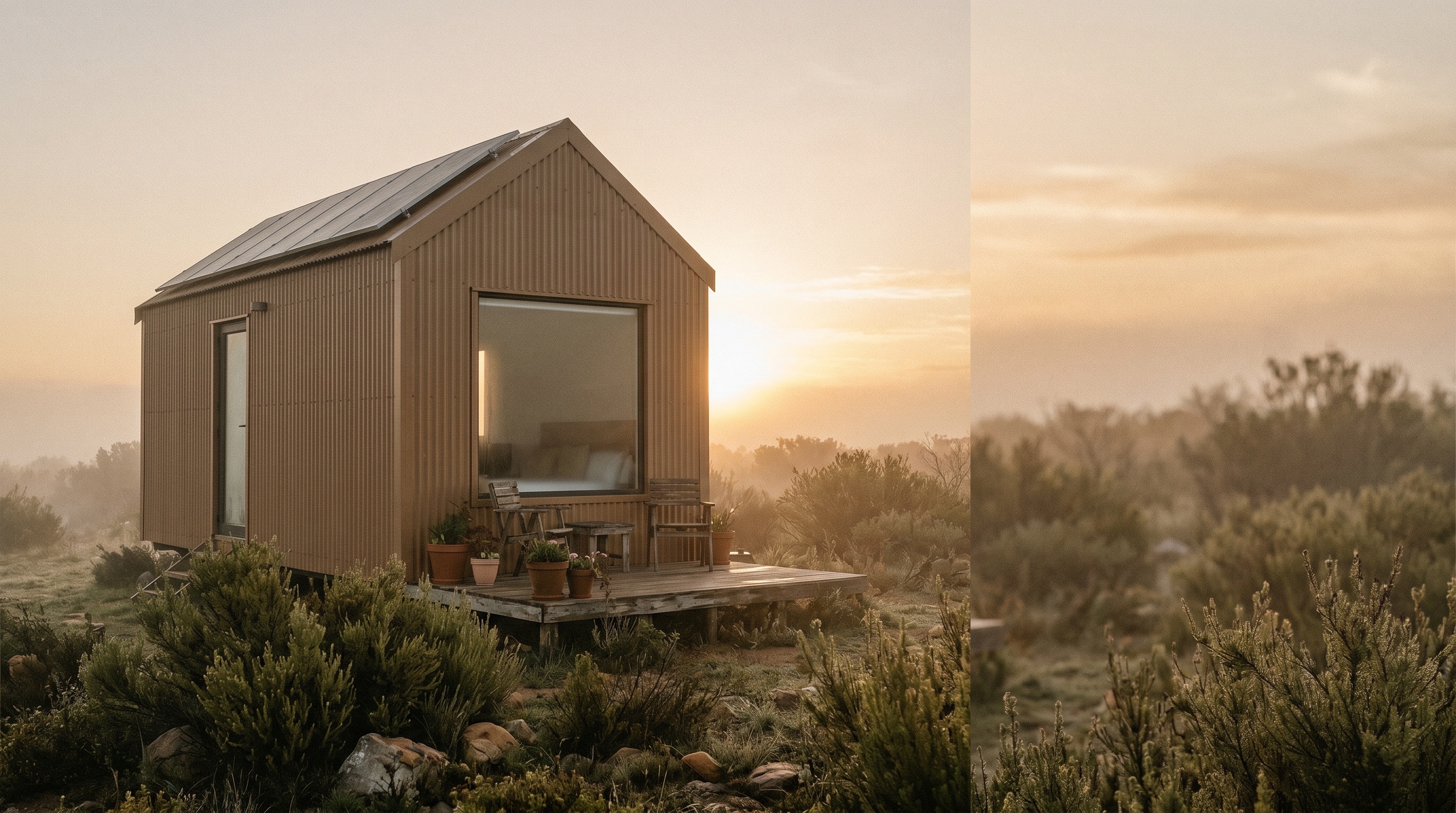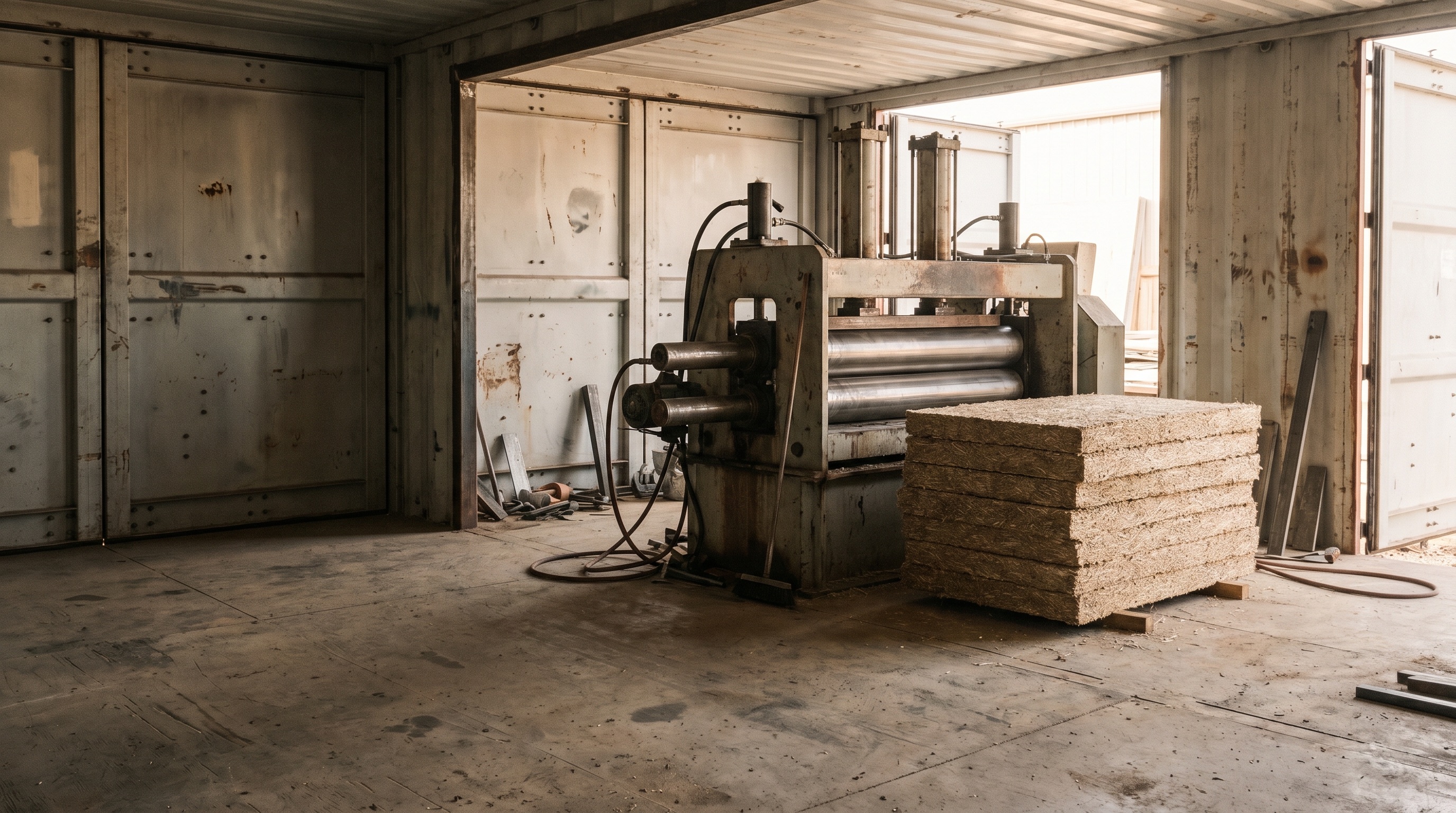
A factory that fits in a shipping container.
Fig 01 · Bara Boards Machine
Bara Boards is the panel and machine engineering work behind our circular building system. We compress agricultural waste straw into high-performance construction panels at the farm gate — the same panels that power Strawtown’s modular homes.
- a. Machine design
Mobile, container-mounted compression rig.
- b. Material engineering
Carbon-negative panel from waste straw.
- c. Production process
Single-operator, renewable-powered.
A low-carbon way to build at scale
South Africa is short 2.3 million homes. Conventional brick-and-mortar emits 300–500 kg CO2e per m2 and leans on imported supply.
The brief: a panel made from local agricultural waste, manufactured close to where the straw is grown, cost-competitive with drywall, MgO and hemp boards.
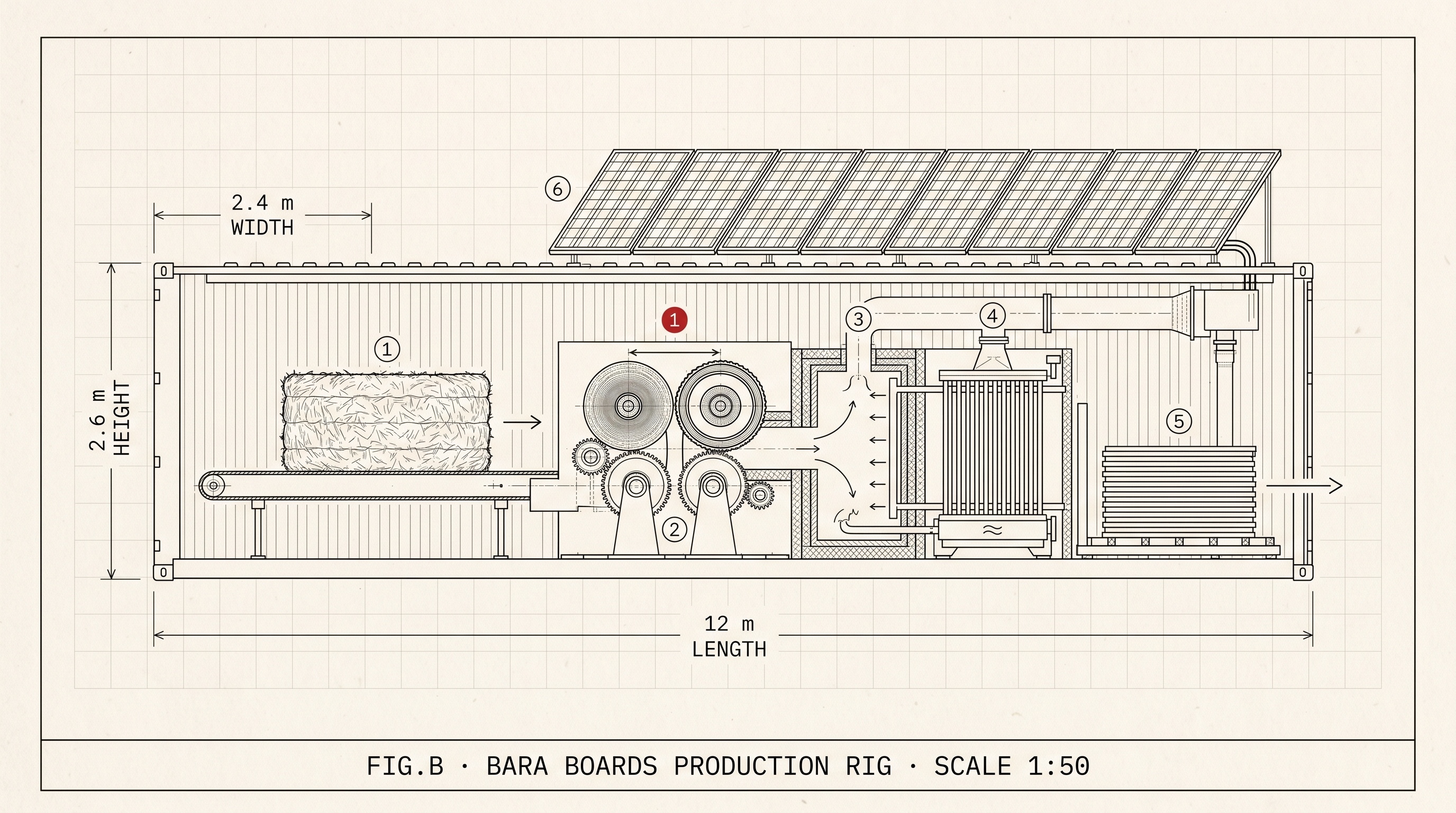
A heat-and-compression rig in a 12 m container
The production rig fits inside a 6–12 m trucking container. It runs on renewable power, draws straw directly from neighbouring farms, and is operated by a small team.
One machine processes 1,370 tonnes of straw waste per year — panels for roughly 180 RDP houses.
- 1. Bale-fed input conveyor with auto-portioning.
- 2. Compression rollers densify the mat to 380 kg/m³.
- 3. Heating section sets the lignin binder — no synthetic glues.
- 4. Cooling, paper liner, cut-to-size, palletised output.
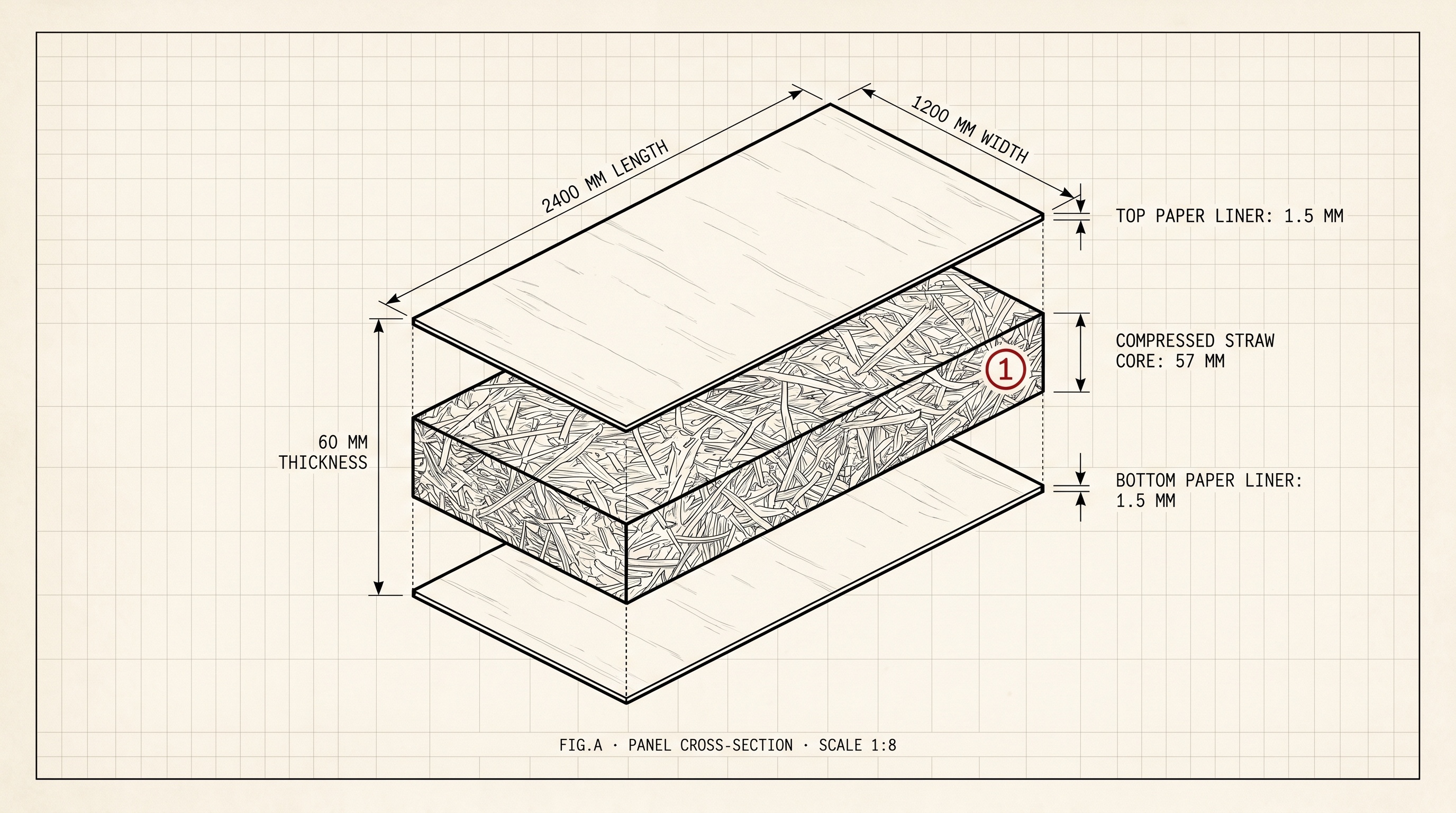
Compressed straw, engineered like a board
Densely compressed straw, finished to industry-standard panel sizes. Fire-resistant — no flaming droplets, no toxic fumes, no dense smoke. Thermally and acoustically insulating. Tougher than comparable drywall under load.
Every m2 of 60 mm panel sequesters −31 kg CO2e from the atmosphere; the panel itself is 100% recyclable and biodegradable at end of life.
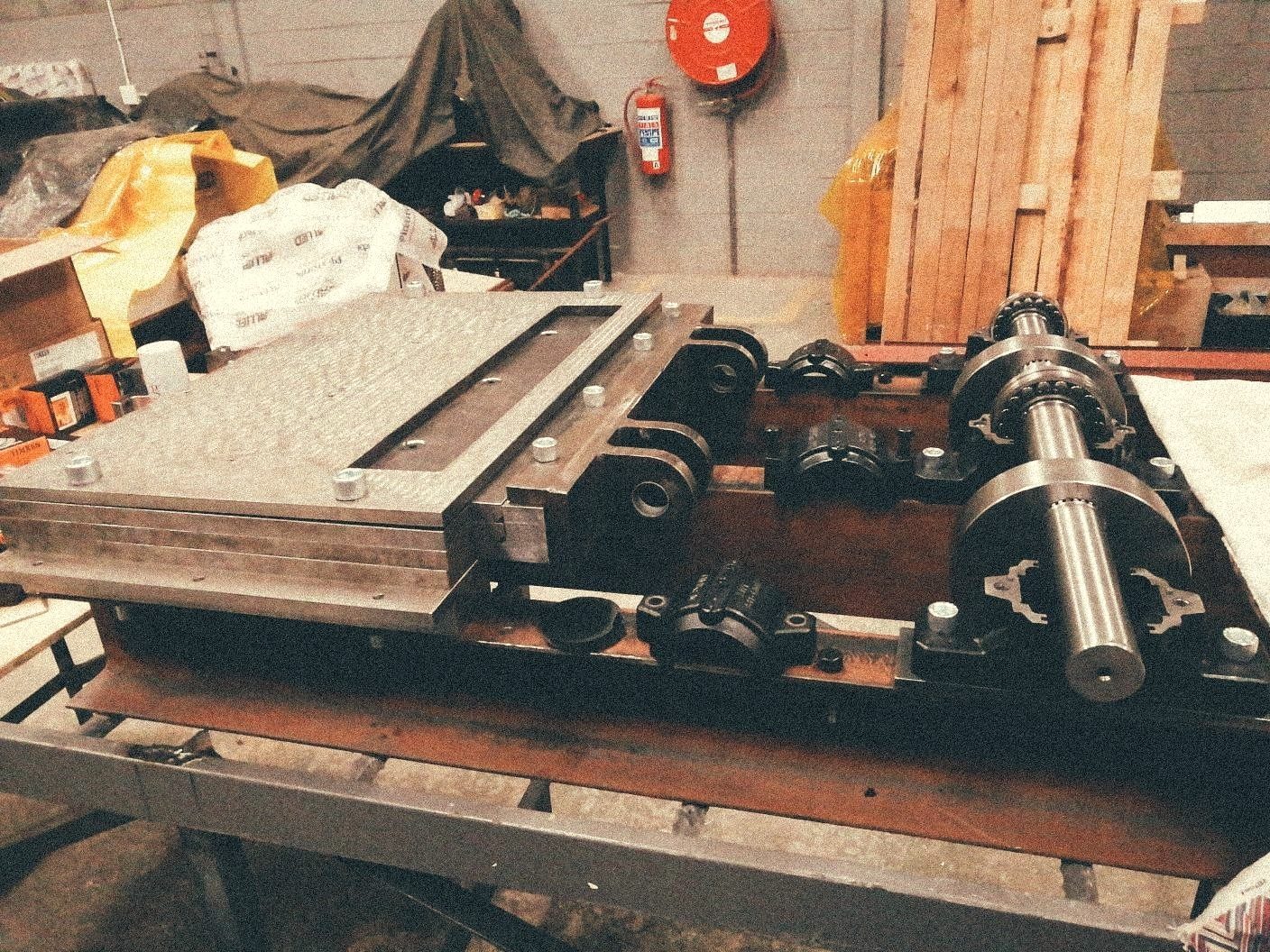
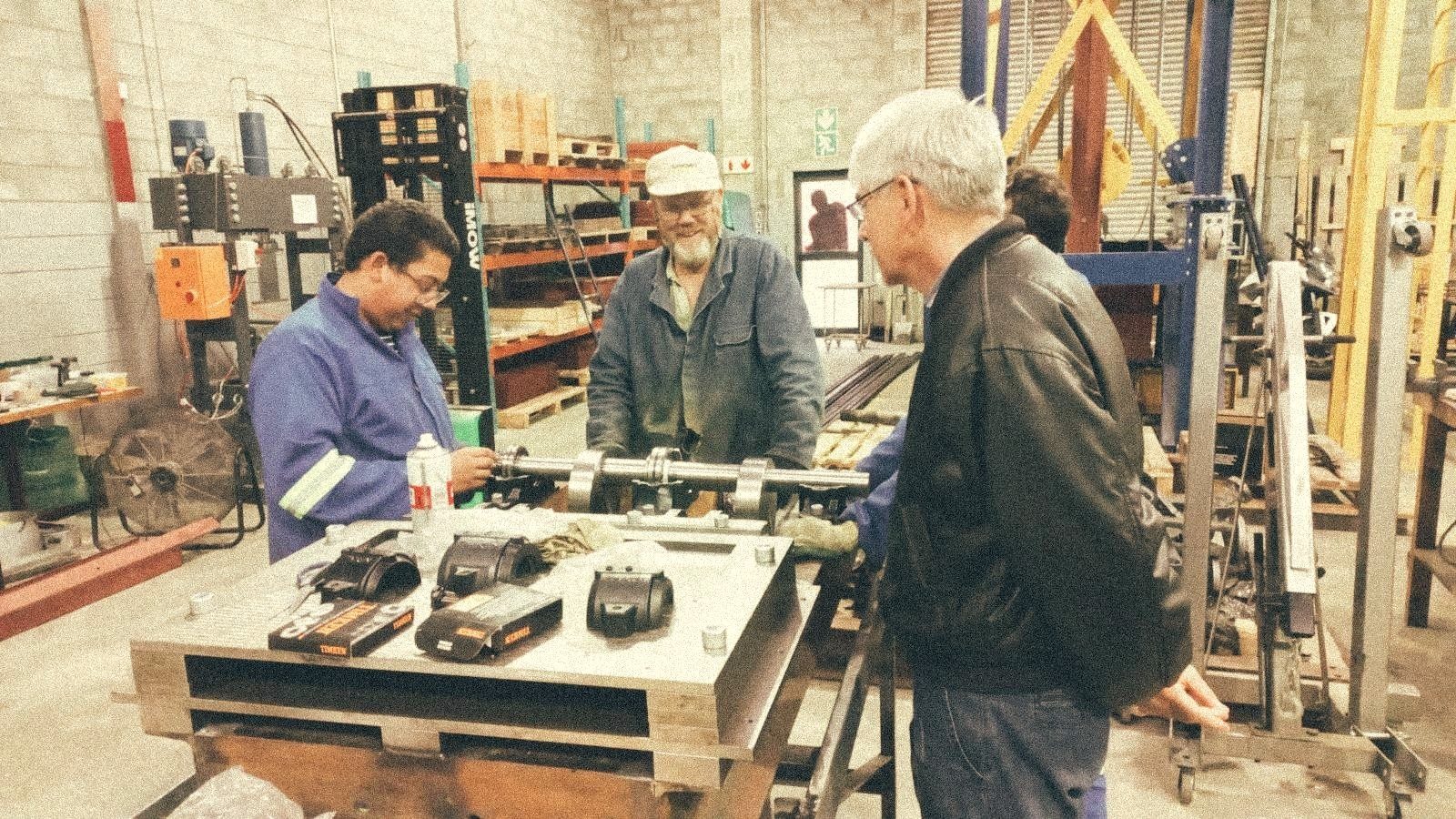
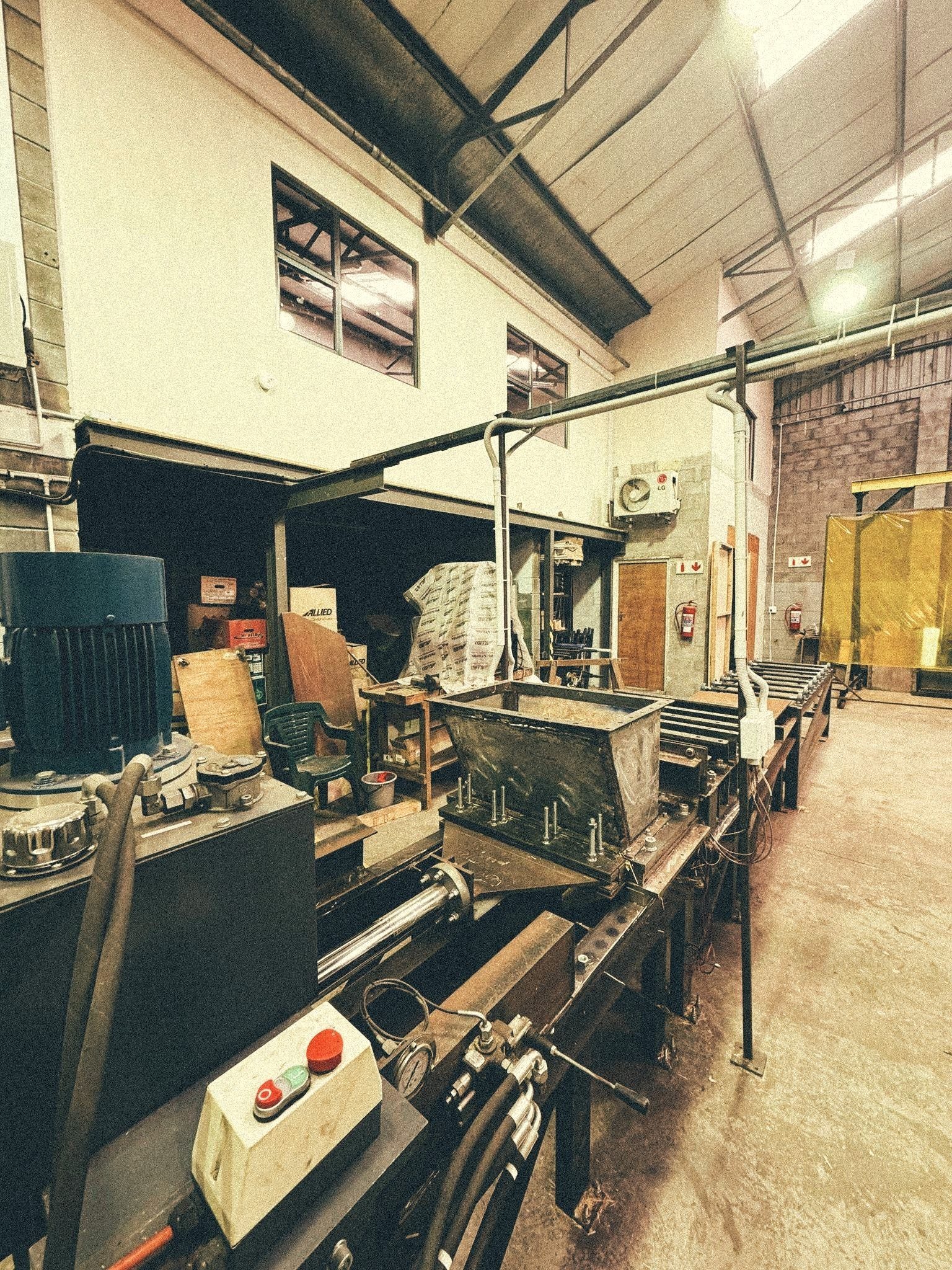
Machine one, on the workshop floor
The first production rig is being built in the Western Cape — the line below is the prototype that the container-mounted version is engineered from.
Per machine, per production year.
1,370 t
Straw processed
94,320
20 mm panels
180
RDP homes equivalent
−1,657 t
CO₂e captured
Operating now — first deployment 2027
The first production machine is being built in the Western Cape. Strawtown is taking the panel to market for off-grid modular housing; we’re engaged with partners on additional territories.