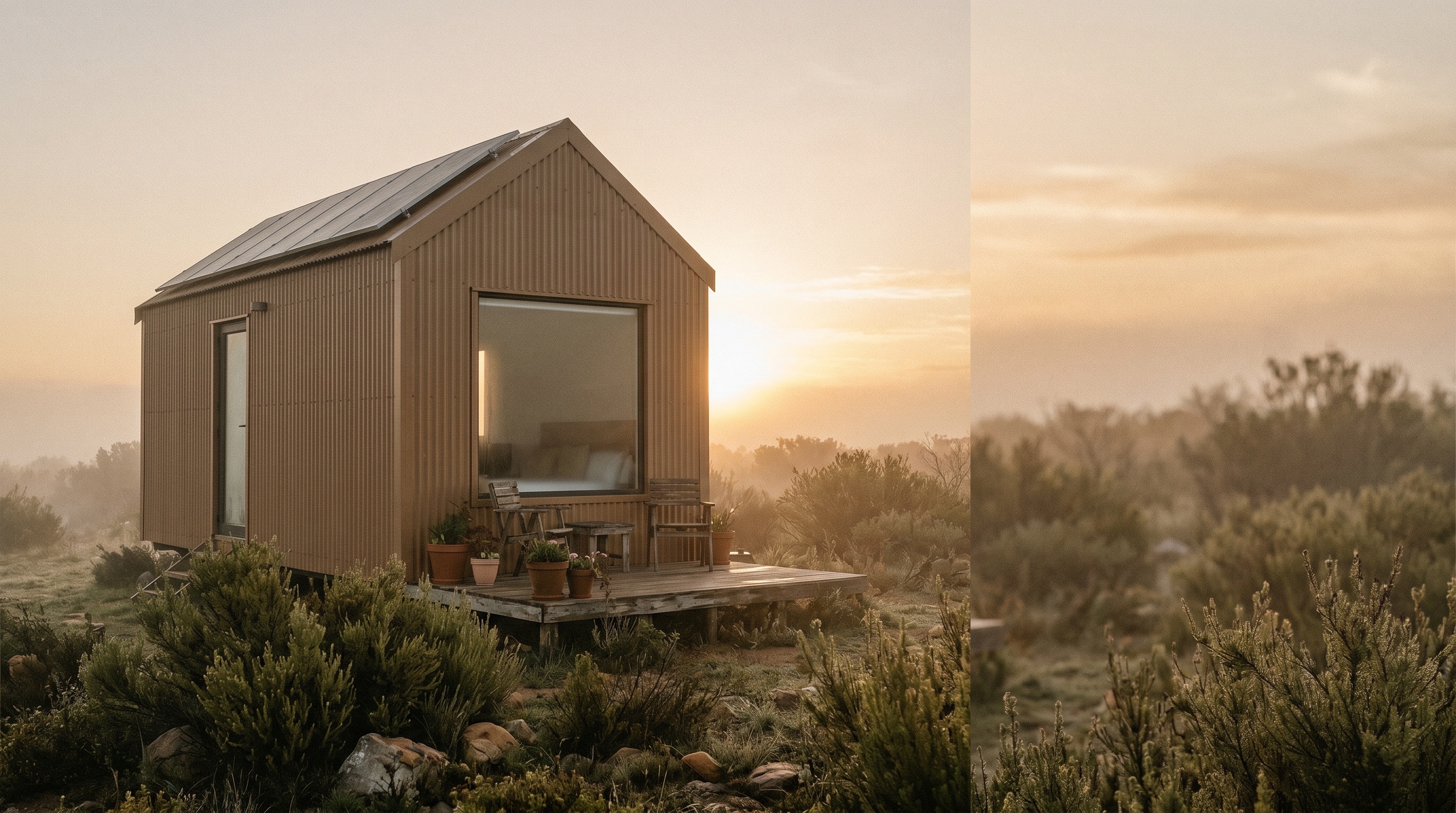
Off-grid living, built from agricultural waste.
Strawtown — Stack One
Strawtown is the housing brand we built on top of Bara Boards. Self-contained modular homes that ship in weeks, run off-grid out of the box, and pull more carbon out of the atmosphere than they emit on the way to site.
- a. Modular system
Single units that stack, expand and relocate without losing structural integrity.
- b. Carbon-negative shell
Bara Boards form the floor, walls and roof — the structure sequesters carbon while it stands.
- c. Off-grid by default
Solar, battery and rainwater integrated from day one, not bolted on after.
A house that doesn’t cost the earth
South Africa is short 2.3 million homes and conventional brick-and-mortar emits 300–500 kg CO2e per m2. The brief: factory-quality off-grid homes that arrive on a flatbed and stand up in days — without leaning on cement, imported steel or grid power.
Strawtown is the answer we wanted to live in ourselves.
One unit, ready to live in. Stack again to grow.
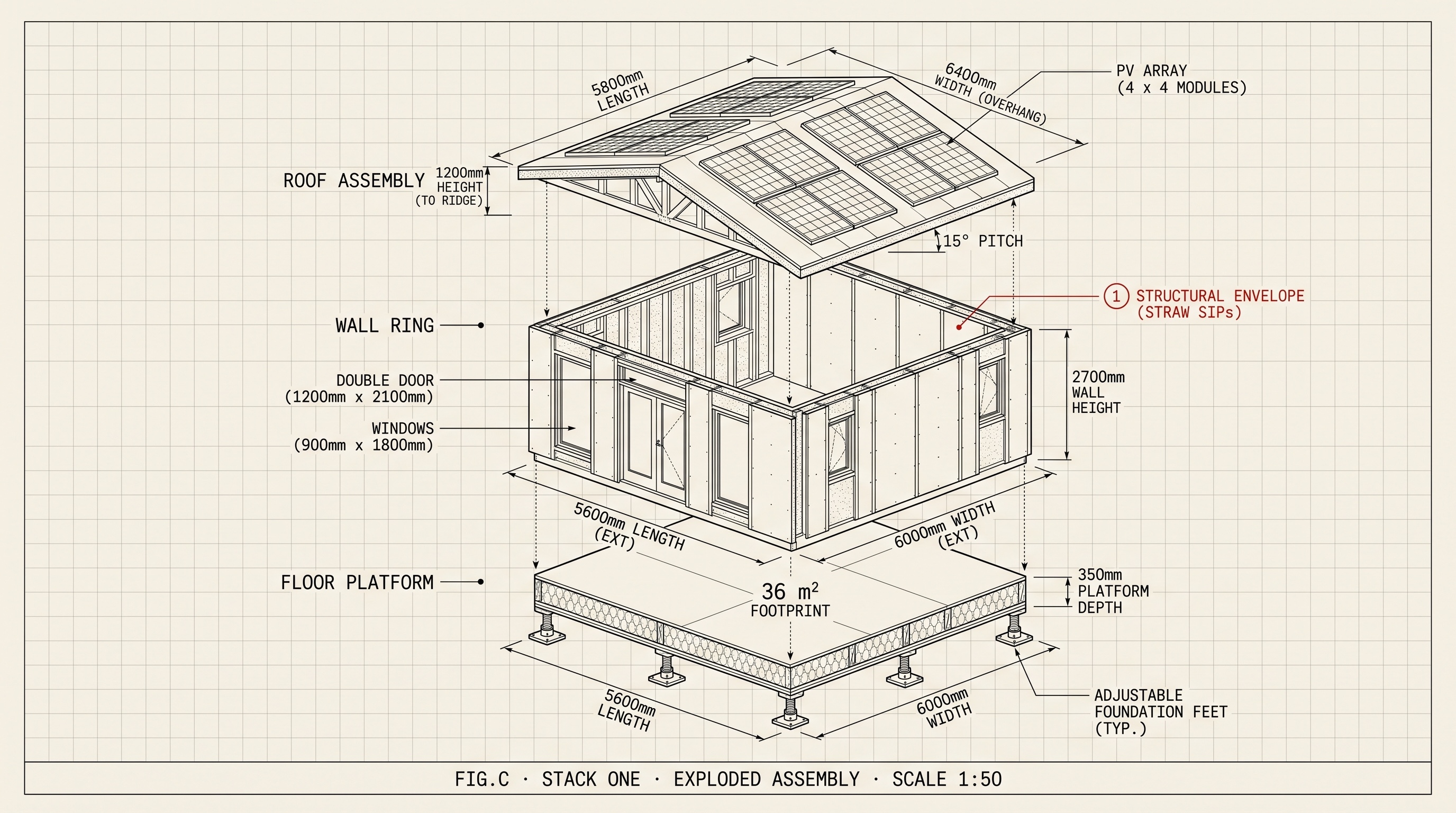
Stack One is the flagship: a single self-contained unit with sleeping, kitchen and bath. Stack Two adds a second unit linked side-by-side or layered above. The system is genuinely modular — units can be added, relocated, or returned to the factory at end of life.
- 1. Roof assembly. Pitched Bara Board deck with an integrated PV array, gutters and flashing. Pre-wired for the off-grid system below.
- 2. Wall ring. Four Bara Board walls preassembled with windows, door and external cladding. Lifted onto the floor as one ring.
- 3. Floor platform. Insulated Bara Board floor on a steel sub-frame, raised on adjustable feet for uneven sites.
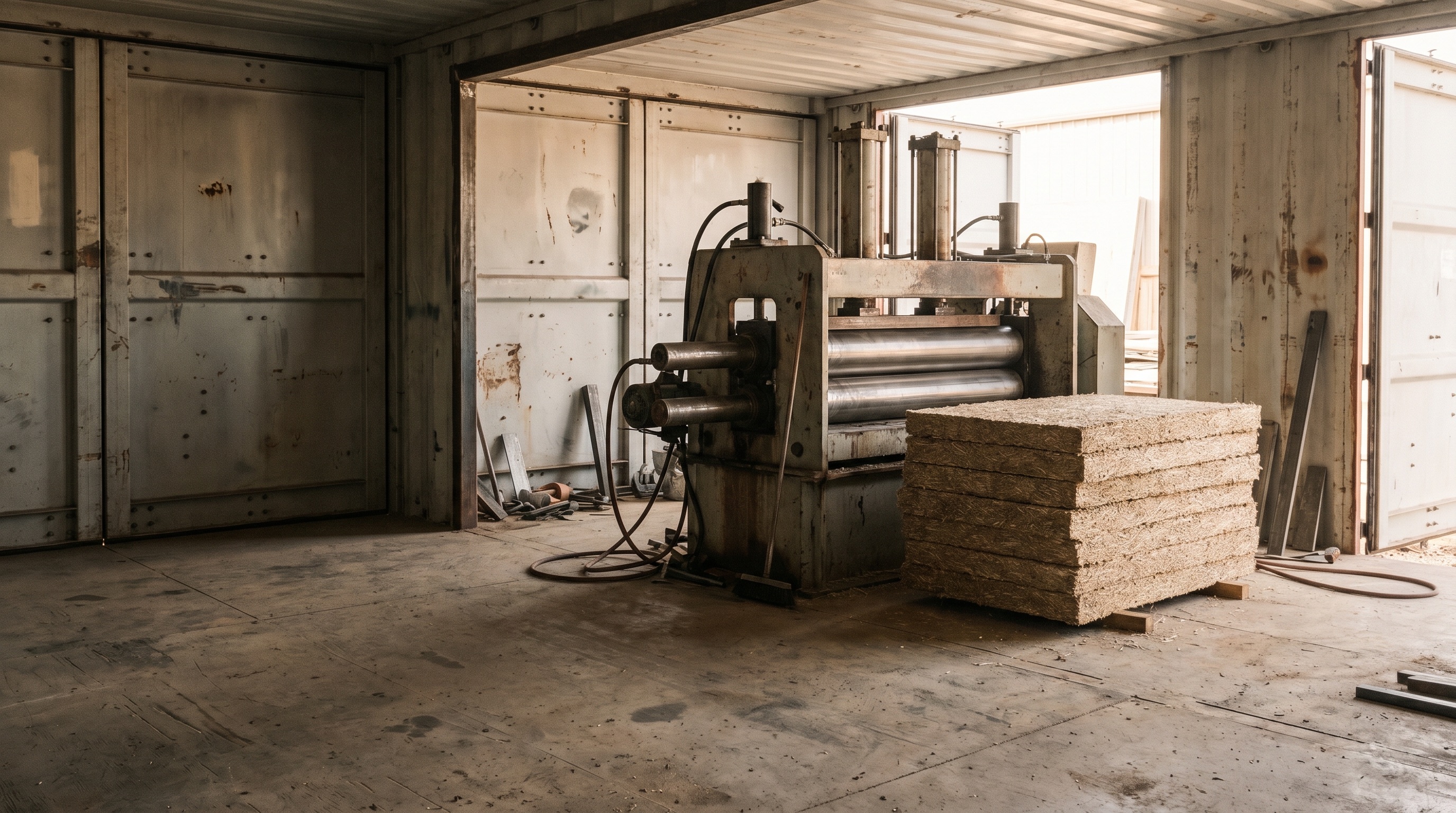
Bara Boards form the structural envelope
Floor, walls, roof — all Bara Board. The compressed straw panels do the heavy lifting that bricks would in a conventional build, with a fire-rated finish layer outside and a paper-faced interior ready for paint or texture.
That’s the trick of the system: no concrete slab, no fired-brick wall, no imported timber frame. The shell sequesters carbon while it stands, insulates better than drywall, and disassembles cleanly at end of life.
Wall stack
External cladding, breather membrane, 60 mm Bara Board, service cavity, paper liner finish.
Roof stack
PV array, weather membrane, 60 mm Bara Board deck, vented soffit, exposed ceiling finish.
Floor stack
Steel sub-frame on adjustable feet, 60 mm Bara Board platform, underfloor service run, sealed timber finish.
Carbon math
Each Stack One uses ~36 m2 of 60 mm panels — roughly −1.1 t CO2e captured in the shell alone.
Open plan, daylight on both long sides
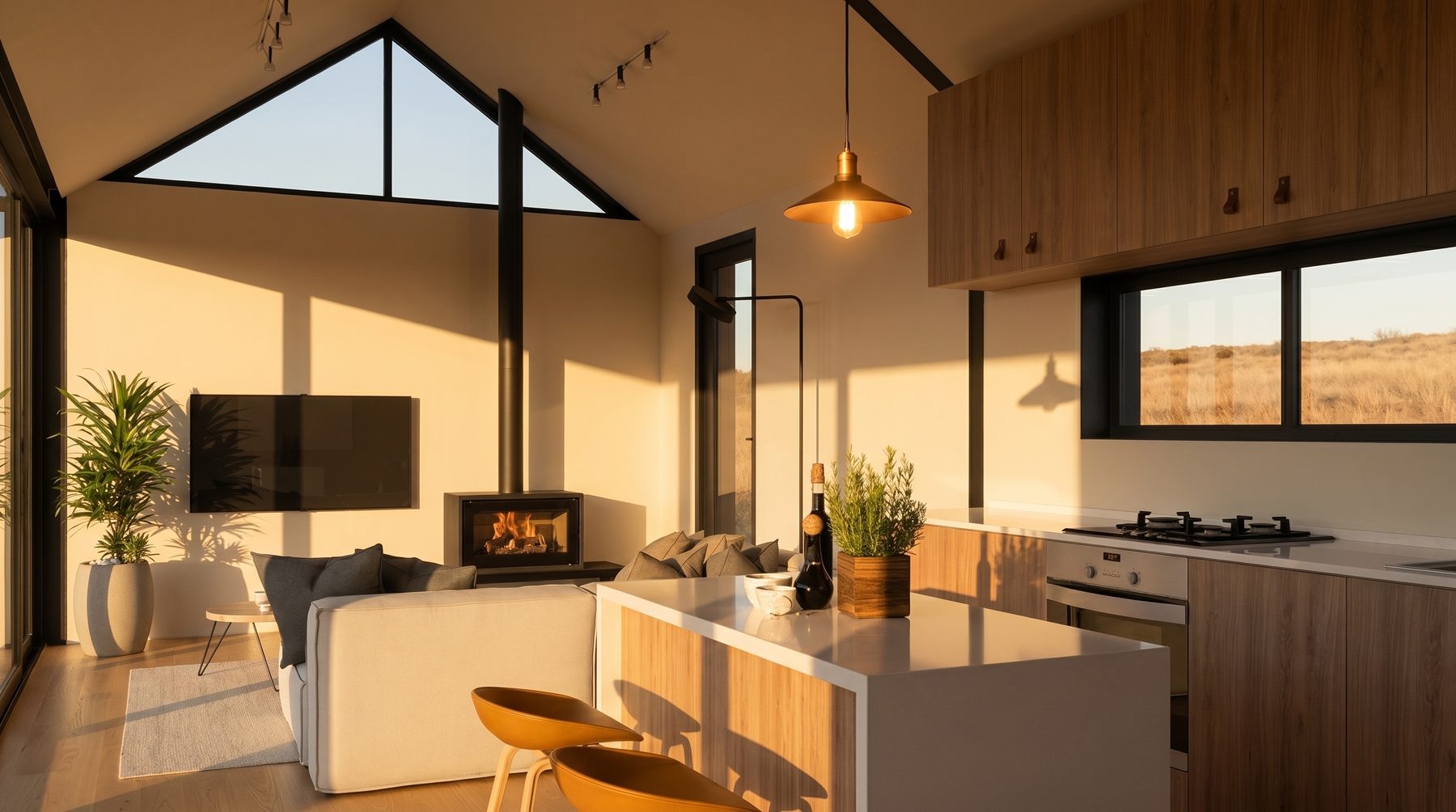
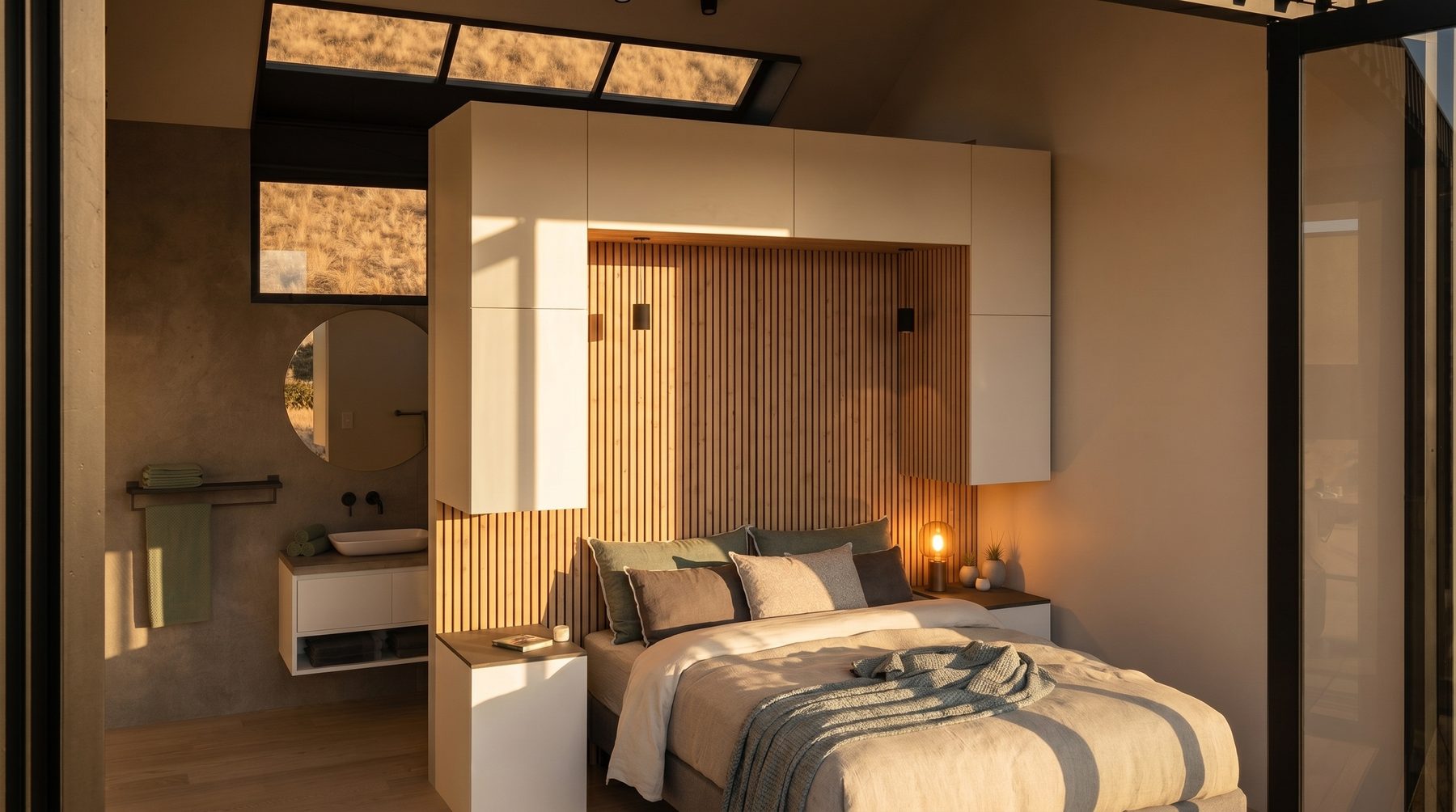
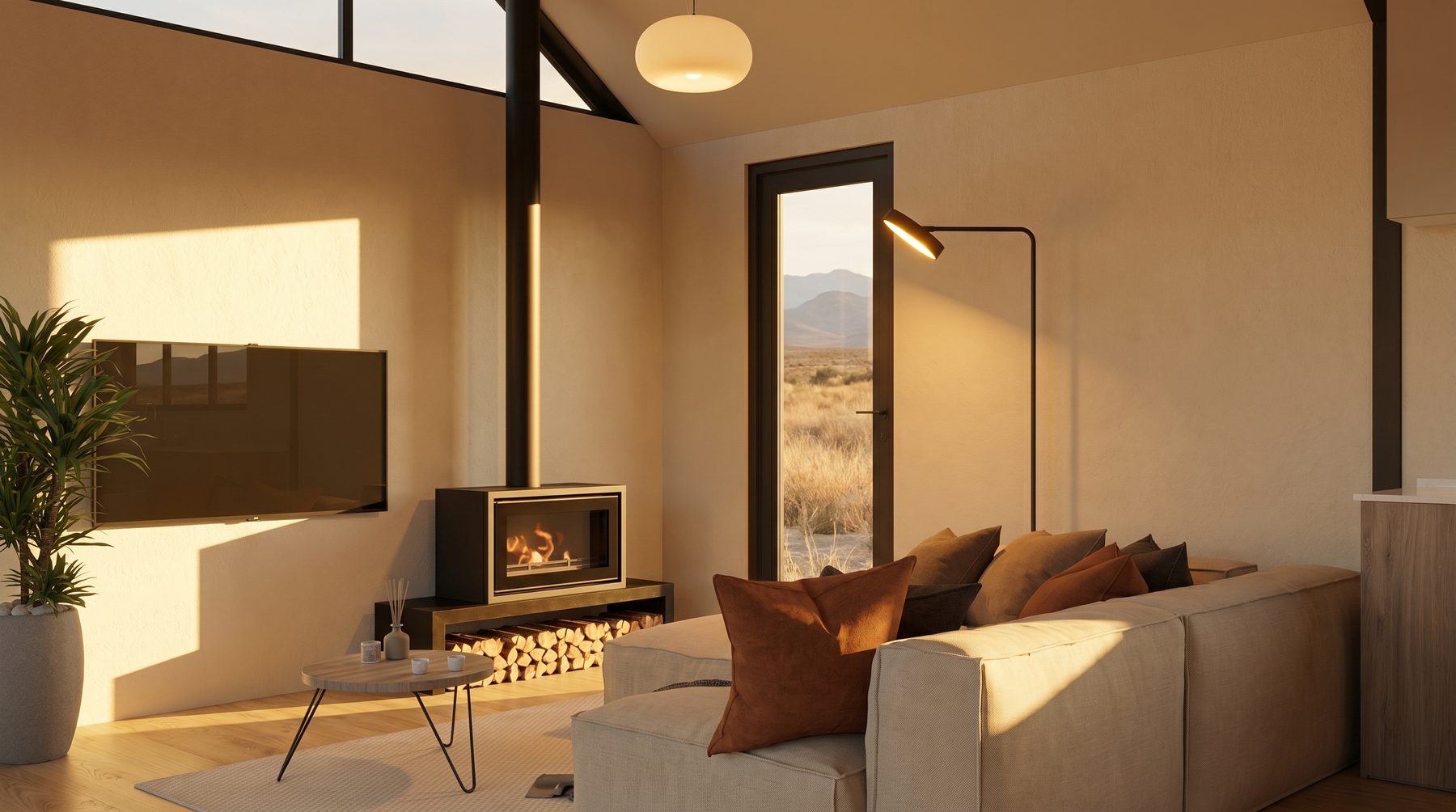
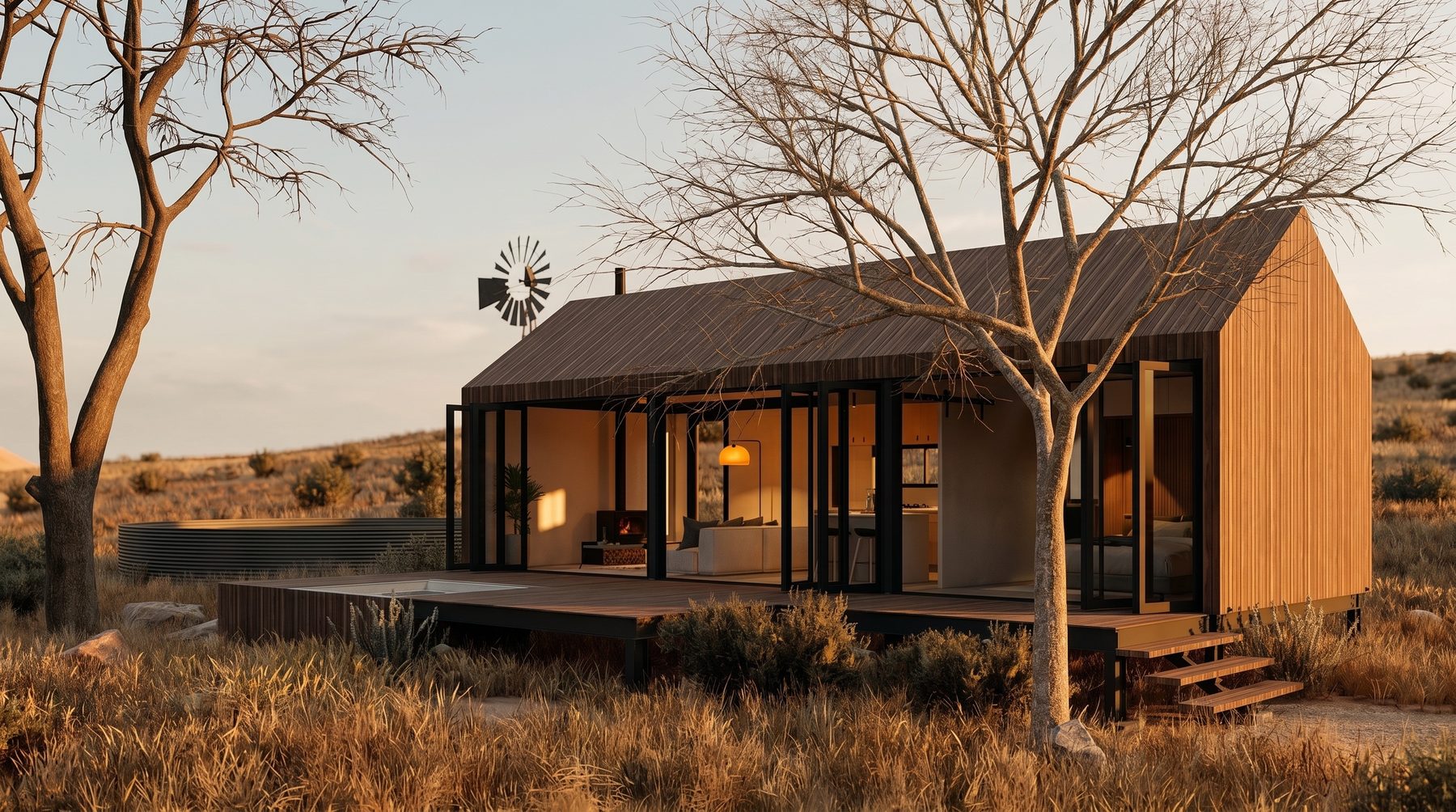
Stack One reads as a single room with the bath and bed tucked behind a sliding partition. The long elevations are glass; the short walls carry the services and the storage.
Indicative figures — per Stack One unit.
36 m²
Stack One footprint
4–6 weeks
Factory to flatbed
−1.1 t
CO₂e captured per unit
5 kWh
Solar storage included
Off-grid kit ships standard with each unit: roof-mounted solar, lithium battery storage, 2,000 L rainwater catchment with first-flush filtration, and a greywater loop sized for a two-person household. Connecting to grid power, municipal water or septic is optional, not assumed.
Stack One pre-orders open with the first production run
The first Bara Boards production machine is being built in the Western Cape. Strawtown begins shipping Stack One units alongside that first run; reservations and partner enquiries are open now.